

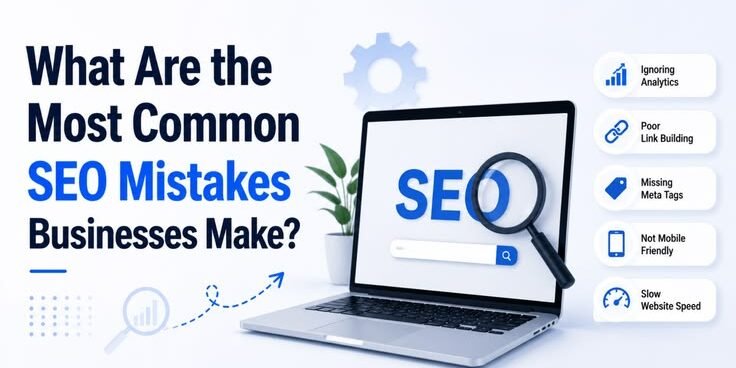
SEO mistakes are the everyday errors that keep a website from ranking, even when the content is good and the intent is honest. Most sites don’t fail because of one catastrophic decision. They fail because of a handful of small, fixable problems that compound over time — a slow page here, a confusing structure there, a title tag nobody thought about.
If you run a website that helps people find information — say, a platform where someone searches for a long-lost relative, verifies a new neighbor, or reconnects with an old classmate — visibility isn’t optional. People searching with real, urgent questions need to find you before they find a competitor. That’s why understanding these mistakes matters, and why working with a team that provides dependable SEO and search visibility services can shorten the learning curve considerably.
Below are the mistakes I see most often, why they hurt, how to spot them, and exactly how to fix each one.
What is the biggest SEO mistake most websites make?
The biggest SEO mistake is targeting the wrong search intent. Search intent is the reason behind a query — what the person actually wants when they type it. Google’s own guidance is explicit: the pages that win are the ones that best satisfy what the searcher is looking for, not the ones stuffed with the most keywords.
Here’s the trap. Someone searches “find a person by phone number.” They want a tool that returns a result fast. If your page instead delivers a 2,000-word essay on the history of phone directories, you’ve answered a question nobody asked. Google notices when visitors bounce back to the results page, and your ranking suffers.
How to fix it: Type your target keyword into Google and study the top five results. Are they tools, guides, comparison pages, or definitions? Match that format. If every top result is a search interface with a short explainer, don’t publish a long article. Give people the fast, direct experience they came for.
Why does keyword stuffing still hurt rankings?
Keyword stuffing hurts because search engines read for meaning, not repetition. Cramming “people search USA” into a paragraph eleven times doesn’t signal relevance — it signals manipulation, and modern algorithms are built to catch it.
I once reviewed a page that used the exact phrase “background check” 40 times in 600 words. It read like a robot wrote it. It ranked on page four. After a rewrite that used the phrase naturally alongside terms like “public records,” “verify identity,” and “find contact details,” the same page climbed to page one within a couple of months.
How to fix it: Write for the person first. Use your main keyword in the title, the first paragraph, and one or two headings, then let natural variations do the rest. Read your draft aloud. If a sentence sounds awkward because of a keyword, cut it.
How does technical SEO affect visibility?
Technical SEO affects whether search engines can find, read, and trust your pages at all. It’s the plumbing behind the content: crawlability, indexing, site speed, security, and structure. Ignore it, and even brilliant content stays invisible.
Common technical failures include pages blocked by robots.txt, broken redirects, missing XML sitemaps, and sites still running on insecure HTTP. Any one of these can quietly wall off entire sections of your site from Google.
How to fix it: Run your domain through Google Search Console and check the Pages report for indexing errors. Fix anything marked “not indexed” that should be public. Confirm your site uses HTTPS. Submit an updated sitemap. These three steps catch the majority of technical problems on a typical site.
Why is thin and duplicate content a problem?
Thin and duplicate content is a problem because it gives search engines nothing distinctive to rank. Thin content — pages with little original value — and duplicate content — near-identical text across multiple URLs — both dilute your authority.
People-search platforms are especially prone to this. Imagine thousands of near-identical profile pages that differ only by a name. Without unique, useful information on each, Google treats them as low value and may skip them entirely.
How to fix it: Consolidate overlapping pages into one strong resource. For template-based pages, add genuinely helpful, differentiated context so each page earns its place. Use a canonical tag — a snippet of code that tells Google which version of a page is the original — to prevent duplicate versions from competing with each other.
Does mobile usability really matter for SEO?
Mobile usability matters because Google indexes the mobile version of your site first. This is called mobile-first indexing, and it’s been Google’s default approach for years. If your mobile experience is broken, your rankings suffer everywhere.
Most people searching for someone are doing it on a phone — standing in a parking lot, sitting in a waiting room, checking a name before a meeting. A cramped layout, tiny tap targets, or a search box that won’t cooperate on a small screen sends them straight to a competitor.
How to fix it: Open your site on your own phone and try to complete a real search. If anything feels clumsy, it is. Then run the pages through Google’s mobile-friendly testing tools and fix flagged issues like unreadable fonts or elements too close together.
How does page speed influence SEO?
Page speed influences SEO because it’s both a ranking factor and a make-or-break part of the user experience. Google’s Core Web Vitals measure real-world loading, interactivity, and visual stability — and slow pages fail all three.
Speed matters most at the exact moment intent is highest. Someone typing in a name wants an answer in seconds. Every extra second of load time increases the chance they abandon the search before it finishes.
How to fix it: Test your key pages in PageSpeed Insights. Compress large images, enable browser caching, and remove scripts you don’t need. Aim to load your main content in under three seconds on a mid-range phone.
Why is internal linking so important?
Internal linking is important because it shows search engines how your pages relate and spreads authority across your site. Links between your own pages help Google understand your structure and help visitors discover more of what you offer.
Poor internal linking leaves valuable pages stranded — orphan pages that nothing links to, so nothing points search engines toward them. A well-linked site guides both people and crawlers naturally from one relevant page to the next.
How to fix it: Map your most important pages, then link to them from related content using clear, descriptive anchor text. Skip vague phrases like “click here.” Every new page should link to at least two existing pages and be linked from at least one.
Should you still care about title tags and meta descriptions?
Yes — title tags and meta descriptions still shape whether people click your result. The title tag is the clickable headline in search results; the meta description is the short summary beneath it. Together they’re often the first impression you make.
A weak title like “Home – Search Site” wastes prime space. A specific one — “Find People Fast: Accurate, Private People Search” — tells searchers exactly what they’ll get and why it’s trustworthy.
How to fix it: Write a unique title (under 60 characters) and meta description (under 160 characters) for every important page. Lead with the benefit and, where it fits, reassure on accuracy and privacy. Google may rewrite descriptions, but a strong one still improves your odds of a click.
What happens when you don’t monitor SEO performance?
When you don’t monitor performance, you’re optimizing blind. You can’t tell what’s working, what slipped, or where a quick fix would pay off. SEO is not a set-it-and-forget-it task.
Rankings shift as competitors publish, algorithms update, and search behavior changes. Without data, a page that quietly dropped from position three to fifteen goes unnoticed until traffic dries up.
How to fix it: Check Google Search Console monthly for clicks, impressions, and average position on your top pages. Watch for pages that fall and refresh them with updated information. Track a small set of priority keywords rather than everything at once.
Why do people expect SEO results too quickly?
People expect fast results because paid ads deliver instantly — but SEO works differently. Earning organic visibility takes time because search engines need to crawl, evaluate, and build trust in your pages against established competitors.
Realistically, meaningful movement often takes three to six months, sometimes longer in competitive niches. Anyone guaranteeing page-one rankings in a week is selling something that doesn’t exist.
Your timeline depends on real factors: content quality, technical health, site authority, competition, and how well you match search intent. Improve those, and results follow — steadily, then compounding.
How to fix it: Set a realistic horizon. Commit to consistent improvements for at least six months and measure progress against your own baseline, not against a magic-number promise.
Frequently asked questions
What is the most damaging SEO mistake?
Targeting the wrong search intent. If your page doesn’t match what searchers actually want, it won’t rank well no matter how polished it is.
Can SEO mistakes get my site penalized?
Yes. Manipulative tactics like aggressive keyword stuffing or spammy backlinks can trigger ranking drops or manual actions. Fix them by focusing on genuine value.
How often should I check for SEO problems?
Review Google Search Console monthly and run a fuller technical audit two to four times a year.
Is duplicate content always harmful?
Not always, but it dilutes ranking signals. Use canonical tags and add unique value to each page to avoid confusion.
How long before SEO fixes show results?
Usually three to six months, depending on competition, site authority, and content quality.
Put these fixes to work
The good news about SEO mistakes: nearly every one is fixable once you know where to look. Start with search intent, clean up your technical foundation, tighten your titles, and commit to steady monitoring. Small corrections, applied consistently, compound into real visibility.
If you’d rather have experts handle the diagnosis and repairs, our SEO team can audit your site, fix what’s holding it back, and build a plan that turns organic search into a reliable source of traffic. Reach out today for a professional SEO assessment — and start earning the visibility your platform deserves.